Cheesy Pork Quesadillas With Avocado Crema

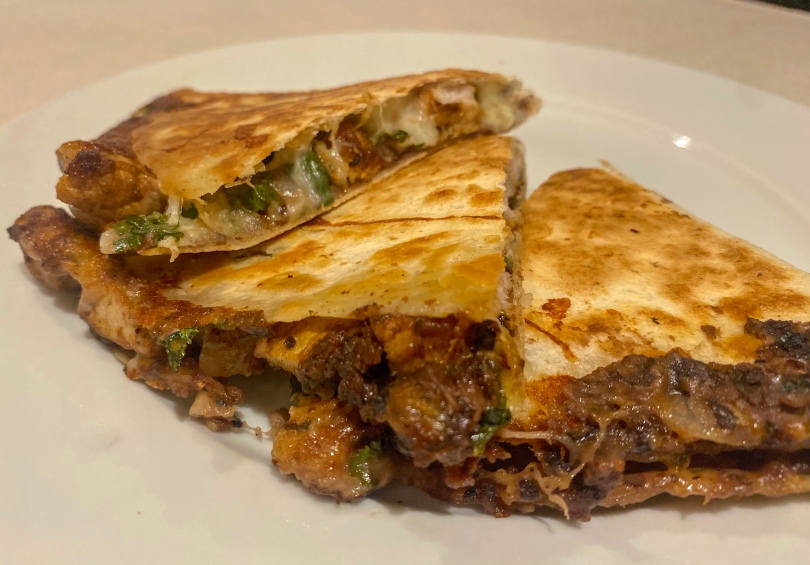
This dish is one of my favourite comfort foods I make. I use a limey, garlicky, coriander-y marinated pork steak, my creamy refried black beans, two types of cheese and fry it up in a tortilla for a delicious meaty cheesy meal – all dipped in a lovely fresh avocado crema. I am the worst (or the best) for overfilling my quesadillas, but I’m not mad becuase it means I end up with this lovely cheesy crust around the outside. If anything, it makes it better. This is a super flavourful, rich but still fresh tasting meal.


Cheesy Pork Quesadillas With Avocado Crema

Serves 2 | 1 hour cooking + prep (+6-24 hours marinating)

Ingredients

Pork:

2 pork loin steaks, chops or shoulder steaks (~240-300g)

Large handful coriander

2 large cloves garlic

Juice & zest of 2 limes

2tbsp white winer vinegar

Salt & Pepper

Beans:

1 400g tin black beans + their juice

2 large cloves garlic minced

Chicken stock pot/cube

2-3tbsp double cream

Avocado Crema:

1 avocado

Juice 1 lime

1 large clove garlic

100ml sour cream or creme fraiche

Quesadillas:

2 large flour tortillas

1/2 white onion diced

60g grated cheddar*

60g low moisture mozzarella grated (see notes)*

*Cheese amounts are not set in stone – please use as much as you’d like

Method

  1. Prepare the pork – you want the pork to be no thicker than 1.5cm. If it is thicker, lay down cling film, lay the pork on top and then another layer of cling film and flatten the pork using a the flat side of a tenderiser or rolling pin to real 1.5cm or less.
  2. Make the marinade for the pork by adding all the ingredients, bar the pork, to a blender and blending until no large lumps are left. Combine the pork and marinate in a bowl or bag and refrigerate for 6-24 hours. Remove the pork from the fridge about an hour before cooking to reach room temperature for more even cooking.
  3. Next up, the refried beans. Heat a splash of olive oil in a small sauce pan over medium heat. Add the garlic and fry until golden.
  4. Add the beans, their liquid, the chicken stock and ~half a tin of water to the pan. Bring to the boil and reduce for 15-20 mins until about 1/3 of the liquid remains. You could reduce for more or less time depending on how thick you like your beans – I like mine a little thinner.
  5. Smash the beans using a potato masher until your desired texture. This is optional, but I like to stir through a little double cream to get a more luxurious texture. If using, add the cream bit by bit, tasting after each addition until it reaches your desired texture and taste. Season to taste with salt and pepper and set aside
  6. Make the avocado crema – add all ingredients to a food processor or blender and blend until smooth. Cover with cling film, you want the cling film to touch the surface to avoid any browning. Set aside in the fridge until ready to use
  7. Now to cook the pork. Coat the bottom of a cast iron (ideally, but other frying pans will work) and heat over medium high heat. Once hot, add the pork steaks. Cook for 2-3 mins each side until cooked through. Be sure to check there is no pinkness left in the middle – cooking time will depend on your hob, pan and steak thickness.
  8. Rest the pork for 5-10 mins under foil, then cut the steak into 1cm cubes.
  9. Now it’s time to assemble the quesadillas. Put a large, dry pan over medium low heat and add the first tortilla. Fill one half of the tortilla as follows: a layer of beans, cheddar, chopped onion, pork, mozzarella. Fold over the tortilla and press down.
  10. Cook until golden brown, flip and cook the other side. A good hint for flipping is to place a plate on top of the frying pan, flip the quesadilla onto the plate then slide it back into the pan.
  11. Repeat to make the second the second quesadilla.
  12. Chop into thirds and serve with the avocado crema for dipping.

Note: In the UK we can’t get blocks of low moisture mozz so we have to use the grated stuff. In this case you’ll need to wash the mozzarella to get rid of the starch (this is used to stop the cheese sticking to itself, but it’ll also stop you getting a nice melt). Put the cheese into a sieve and rinse under cold water until the water runs clear. Spread the cheese in a thin layer onto paper towels and leave to dry.
Pasta Puttanesca

Puttanesca (-esque) Sauce

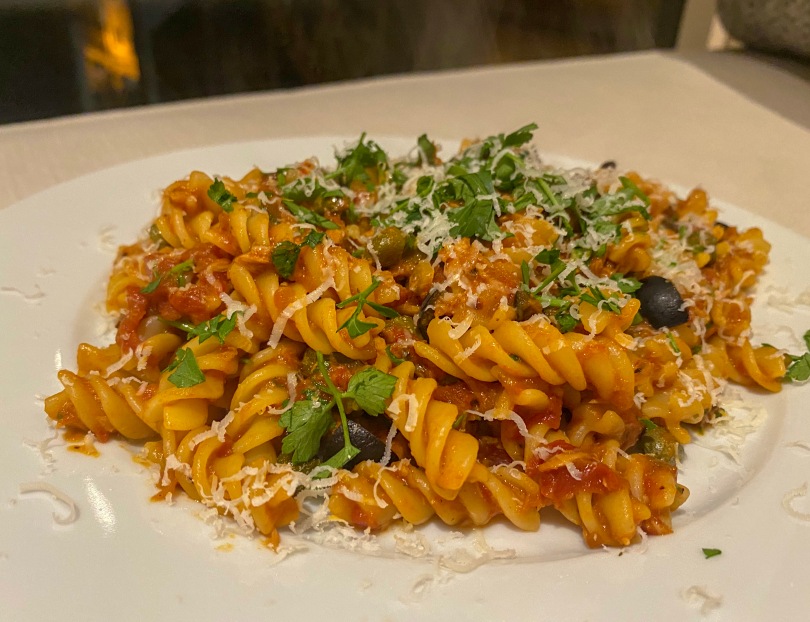
I learnt about this sauce from the Series of Unfortunate Events movie (IYKYK) and I’ve never looked back. Its a super salty, umami, rich tomatoey sauce – it really packs a punch without feeling too heavy. This is such a great go to weeknight dinner, sped up even more by using a frozen batch of my marinara. I always have a stock of this in my freezer as it can be adapted for so many dishes, and having the sauce ready knocks a good 20 mins off cooking times. This is another of my 15 minute pasta dishes where the sauce is prepped & cooked in the time it takes the pasta to cook. I’ve called this puttaensca-esque as I’ve included tuna which the original doesn’t – I love the addition of tuna for some extra fishiness and protein which keeps me fuller longer.


Putanesca (-esque) Sauce

Serves 1 | 15 mins prep + cook

Ingredients

100g fusilli or other short pasta (or 75g if you aren’t very hungry like me 95% of the time)

1 large clove garlic, thinly sliced

3 jarred/tinned anchovy fillets

1/2 tin tuna (drained)

1/4 batch of my marinara sauce

35g black olives roughly chopped

1tbsp capers

Sprinkle of chilli flakes, to taste

Handful parsley finely chopped

Squeeze of lemon to taste

Parmesan to serve

Method

  1. Cook the pasta in a heavily salted pan of water until al dente.
  2. Meanwhile, heat a splash of olive oil in a frying pan over medium high heat. Add the anchovies and fry, stirring often, until they dissolve into the oil.
  3. Add the garlic and frying until golden. Keep a close eye on this as this will burn quickly. Add the tuna and stir until combined
  4. Reduce the heat to low and add the marinara, capers, olives and chilli flakes (if using). Stir until warmed through. If the sauce is too thick at this point, add some pasta water to reach the desired consistency.
  5. Take off the heat, add salt, pepper and lemon juice to taste. Stir through the parsley (reserve some to serve) and set aside.
  6. Once the pasta is cooked, combine with the sauce and serve with the remaining parsley sprinkled on top and some grated parmesan.
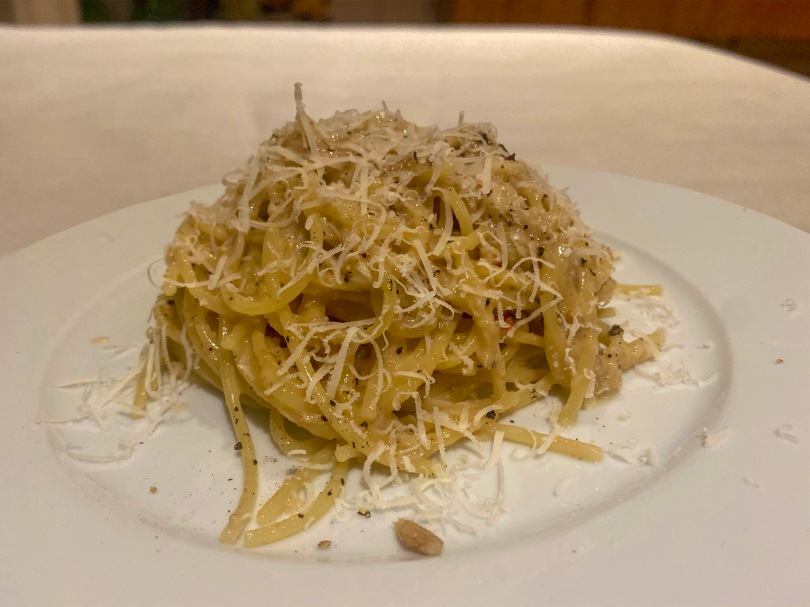
Crabonara (crab carbonara)

Crabonara (Crab Carbonara)

This dish was born out of my mum mishearing carbonara as crabonara – at the time neither of us had any idea that she had just inspired one of my best recipes yet (in my opinion anyway). It really is what it says on the tin – a carbonara but with crab instead of bacon. It’s a super quick dinner, perfect for a week night, that doesn’t skimp on quality or flavour. It really is a 15 minute meal – everything can be prepped while the pasta cooks. It’s creamy and rich like a carbonara, but with the delicate saltiness of crab instead of the salty punch from pancetta. 2 different but equally delicious meals. This version is a lot less rich than my Perfect Carbonara as it uses only the 1 egg per person, making it a bit more suitable for an everyday meal.


Crabonara

Serves 2 | 15 mins

Ingredients

200g long pasta (spaghetti or linguine work well)

100g mixed crab meat

1 large clove garlic

2 eggs

50g parmesan, grated + more for service

Freshly ground black pepper

Splash of olive oil

Method

  1. Cook the pasta in heavily salted boiling water 2 mins shorter than the packet says
  2. In the meantime, heat up a splash of olive oil in a frying pan over medium heat. Add the garlic and fry until lightly golden. Add the crab and cook, stirring often, until warmed through. Set the pan aside
  3. Beat the eggs with the parmesan in a bowl and add freshly cracked black pepper. Near the end of the pasta cooking time, add 2-3 tablespoons of pasta water to this mix while stirring (this will temper the eggs).
  4. Once the pasta is cooked, transfer it to the frying pan with the crab in. Turn a hob to low heat but keep the pan away from the heat for the moment.
  5. Add the egg mix into the pasta pan, be sure to keep moving the pasta continuously to avoid scrambling the eggs.
  6. Move the pan on and off the heat, stirring continuously until the egg is cooked and a silky sauce has formed (a few mins, depends on your hob). If you think the pasta is too dry add a tablespoon or two of pasta water until it’s your desired consistency.
  7. Serve with more freshly cracked black pepper and grated parmesan.
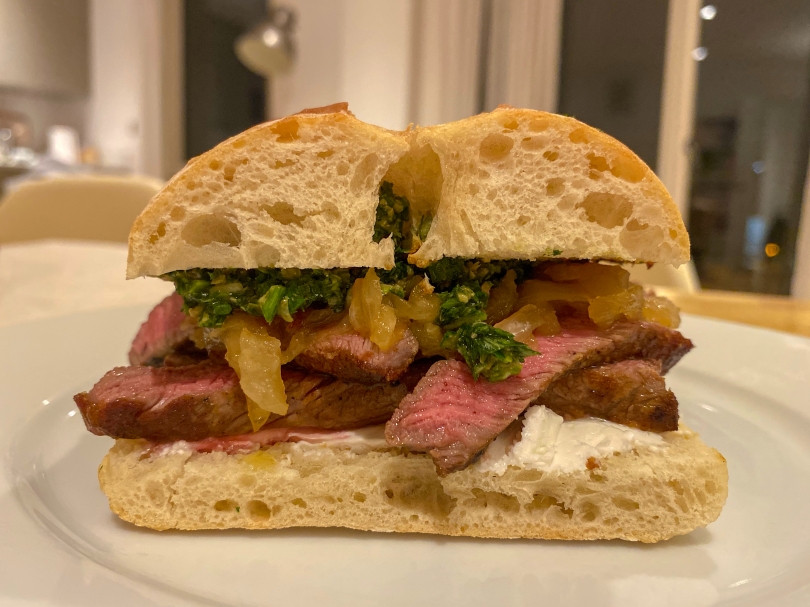
Steak sandwich with onion, goats cheese and salsa verde

Steak Sandwiches With Goats Cheese, Onions & Salsa Verde

I absolutely love steak sandwiches because I think it opens up the space to be really inventive with a steak. Steak and good bread is such a good base for almost any flavourings, but my personal favourite is this combo with salsa verde, caramelised onions and goats cheese. The onions and steak are both buttery rich, and the salsa verde cuts through that perfectly. For me, goats cheese is the perfect pairing as it adds the soft, creamy texture the sandwich needs but with an added tang. I know goats cheese can be a bit controversial, but I absolutely love it and stand by its use in this sandwich (that being said if you want to sub it for another soft cheese or good mayo I won’t be offended, as long as you let me know how it goes). I’ve also added my top tips for cooking a good steak at the end – not to toot my own horn but I really think I’ve mastered the perfect steak. I get mine caramelised on the outside with loads of butter and garlic, but still pink on the inside. All in all this sandwich really feels like a proper treat dinner – each component is delicious, well made and perfectly balanced.


Steak Sandwiches With Goats Cheese, Onions & Salsa Verde

Serves 2 | 45 mins prep + cooking

Ingredients

2 steaks of your choice or ~500g (I usually go for ribeye – good marbling)

2 white onions

1tbsp olive oil

3tbsp butter

1 batch of my salsa verde

2 large cloves garlic, peeled and squished

60g goats cheese

Ciabatta loaf (or bread of your choice)

Vegetable oil, to cook the steak

Method

  1. A couple of hours before you want to start cooking, remove your steak from the fridge, pat dry with kitchen towel and leave it out to dry and get to room temperature. This will allow you to get a good caramelisation on the steak when you cook it.
  2. Cut off the top & bottom of the onions, peel & chop in half. Finely slice the onions into half moons from side to side, not from top to bottom as this will caramelise better.
  3. Add the olive oil & 1tbsp of the butter to a saucepan and melt over a medium to low heat. When the butter has melted, add in the onions and a big pinch of salt. Stir to coat and put on a lid. Leave this to cook, stirring regularly, for~30mins until soft, jammy and caramelised.
  4. Once the onions are nearly cooked, it’s time to start the steak. Cover the bottom of a cast iron (or other) frying pan with a layer of vegetable oil and heat on high heat until smoking hot. Pat the steak dry one more time, then rub all over with olive oil. Right before you’re ready to add the steak to the pan season both sides generously with salt and pepper.
  5. Add the steaks to the pan, and allow to cook undisturbed for 1-3 minutes. Cooking time will be really variable depending on how you like your steak cooked, the thickness of the steak and your hob. Once cooked to your liking on one side, flip the steaks and add 2 tbsp butter and the garlic. The butter will foam up – use this to baste your steaks for the remaining cooking time.
  6. Once the steaks are cooked, transfer to a chopping board & place the garlic on top. Cover with foil & rest for ~10 mins.
  7. Split the bread in half and toast each side in a dry pan until golden.
  8. Now for assembly, first thinly slice the steak against the grain. Spread the goats cheese on the bottom layer of the bread, top this with the sliced steak and onions. Spread salsa verde on the top layer of the bread and close the sandwich. I like to serve my sandwiches wrapped in foil to prevent structural failure while eating.

My Top Tips for Cooking a Good Steak (from lots of trial and error)

  • Always leave the steak to reach room temperature before cooking
  • Always make sure the steak is very dry before cooking to allow caramelisation to form. Do this by patting with kitchen towel & leaving out before cooking to air dry.
  • Only salt the steak just before cooking, as the salt will draw out moisture undoing all the good drying work you’ve done.
  • Cover the whole base of the pan in oil and leave to get ripping hot before adding the steak. This will allow a caramelised crust to form on the steak
  • If you have a thick fat layer, you’ll need to render this. Using tongues, hold the steak fat side down for about a minute until golden and crispy. Then continue with the cooking process above.
  • Don’t move the steak until it’s time to flip again to allow a good caramelised crust to form.
  • Add butter, garlic & herbs after the first flip and baste to get that flavour into the steak.
  • Rest for about 10mins after cooking, this way the steak will soak up all the juices it releases and stay really moist.
  • Cut against the grain, this will make it easier to bit through in sandwich form.
Salsa Verde

Basics By Meg: Salsa Verde

Next up in the basics series we have this beautifully fresh and salty condiment, made of fresh herbs, garlic, salty capers and anchovies, all bound with some extra virgin olive oil. This is the perfect addition to any rich, fatty dish as it cuts right through the richness, leaving you with a very fresh feeling dish. I use this a lot with pork belly, for example in my Porchetta style sandwiches, as it really complements the fatty meat. It’s also really beautiful served with some fresh white fish, like a sea-bass, or even just on toast. It really is a very versatile sauce that can elevate your dish – hence why I feel it deserves a spot on the basics list.


Salsa Verde

Serves 2 large portions/4 small | 10 mins prep

Ingredients

Large handful parsley

Large handful basil

Small handful mint

1 large garlic clove

4-6 tinned anchovy fillets

1tbsp capers

3tbsp extra virgin olive oil

1tsp red wine vinegar

Method

  1. This is all prepped on one board. Start by mincing the garlic, anchovies & capers on a chopping board. I like to use a cleaver for this as it makes life a lot easier in future for folding the ingredients in on themselves. Push the garlic/caper/anchovy mix to one side.
  2. On the same board, roughly chop the herbs then add in the garlic, capers and anchovies. Now go to town chopping. Regularly scrape the mix in and fold it on top of itself. Keep chopping until everything is very fine & evenly sized.
  3. Transfer this mix to a bowl and stir in the oil and vinegar. Taste this for seasoning – add more vinegar, oil or salt to taste.
Wedding cake sample

How To Host A Wedding Cake Tasting

As my friends’ and family’s resident baker, I’ve now been drafted for 3 wedding cakes, having never done one before… The first one is for my cousin & her fiancé in May, so of course we needed to do a cake tasting to decide the flavours. For context, my cousin is also a major foodie & definitely a big part of why I now am so obsessed with food – check out her insta @bees.eats if you need proof. I asked them for a list of flavours they might like and they sent these criteria:

  1. Chocolate tier: plain choc or with a salted/miso caramel/something salty, also pistachio
  2. Fruit tier: passionfruit, mango, raspberry, lemon & elderflower. No coconut

So I took that brief & made loads of cakes, frostings & fillings that fit the brief (using a trusty spreadsheet to plan the timing because I am that person). I decided not to assemble whole cakes, and instead to lay out all the components to mix & match the flavours. That saves me a lot of time and means we can try more combinations.

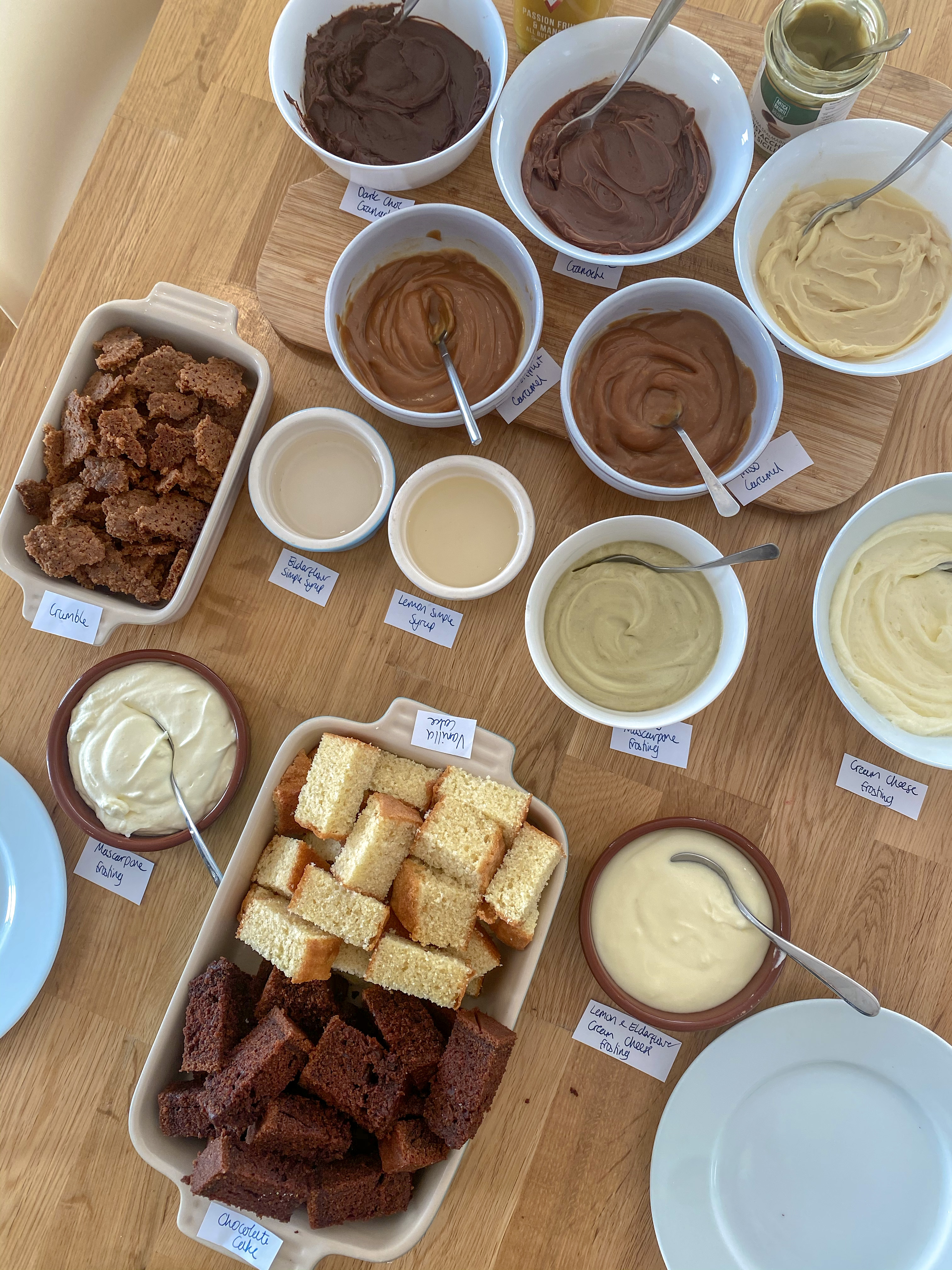
Here is the final spread:

Wedding cake tasting
Wedding cake tasting spread
  1. A Vanilla Sponge: I swear by Cupcake Jemma’s recipe – super buttery & moist (sorry), but really holds structure. This recipe, and all other Cupcake Jemma ones mentioned, are in The Cake Book – this is my baking bible & I recommend it to everyone. It has the best basic staple recipes (& lots of exciting cupcake recipes too). I used the raspberry ripple cake recipe but without the raspberry fruit goo. I made 1/2 of the recipe and cooked it in one 20cm tin, which meant I needed to cook it a little longer than the recipe said.
  2. A Chocolate Sponge: Again, I use Cupcake Jemma’s recipe. It’s so fudgy & the perfect level of richness. I used the ridiculous chocolate cake recipe. I made 2/3 of the chocolate cake recipe and cooked it in one 20cm tin. Again I had to cook this a little longer.
  3. Elderflower Simple Syrup: I made my simple syrups by first heating equal parts water & granulated sugar over a medium heat until the sugar dissolved. Leave this to cool, then add elderflower cordial to taste. I use simple syrup to infuse more flavour into the cakes but also to keep them moist (sorry again) while decorating & being stored.
  4. Lemon Simple Syrup: I used the same base syrup as above but added fresh lemon juice to taste.
  5. Passionfruit Simple Syrup: Same as above, but sub the lemon juice for passionfruit juice (push the pulp through a sieve)
  6. Cream Cheese Frosting: I use cupcake Jemma’s recipe for this one again from the book above. I made 1/4 of the recipe.
  7. Lemon & Elderflower Cream Cheese Frosting: For this I used 1/2 of the cream cheese frosting I made (I left half plain) & stirred in elderflower cordial & lemon juice to taste. This does make the frosting a little runny, but it’s absolutely fine for getting the flavour in a tasting where we don’t need the structural support.
  8. Mascarpone Frosting: I used 1/2 this recipe for this frosting. This makes a really rich, creamy filling that’s not too sweet.
  9. Pistachio Mascarpone Frosting: I used 1/2 of the mascarpone frosting I made (& left half plain) & beat in a few teaspoons of pistachio cream (or to taste). Something like this pistachio cream from Sous Chef – I buy mine from Eataly.
  10. Passionfruit Caramel: I used this recipe for caramel which makes a thick caramel sauce, the perfect texture for spreading with an almost bitter taste to it if you cook the sugar until deep amber. I took half of the caramel and stirred through the juice strained from one passionfruit. I absolutely loved this – it was thick & rich, with a kick of passionfruit sharpness. It wasn’t too sweet either I think due to the passionfruit, and that I cooked the sugar until quite a deep colour which gave it a beautiful bitterness.
  11. Miso Caramel: I dissolved ~1tsp of miso in 1tsp of boiling water & stirred this through the remaining half of the caramel. Think highly elevated salted caramel – the miso gives the savoury side to this rich caramel.
  12. Milk, White & Dark Ganache: I used 100g of each with cream in the following ratios. Dark 1:1, Milk 2:1, white 3:1. This Liv for Cake post explains the different ratios needed for each chocolate type and texture needed. I used the runnier ratio as this was just for tasting, but in a cake I’d want a thicker texture.
  13. Crumble: I used Yolanda Gampp’s recipe for this but without the cinnamon. This is the perfect buttery crunch to add some texture to your cake.
  14. Passionfruit & Mango Curd: I ordered this, but will likely make it for the big day. I used Cottage Delight’s Mango & Passionfruit curd which was really great – very tangy and buttery.

I cut the cake into little chunks so we could add whatever syrups, fillings or toppings we wanted to make mini cake bites.

Wedding cake sample
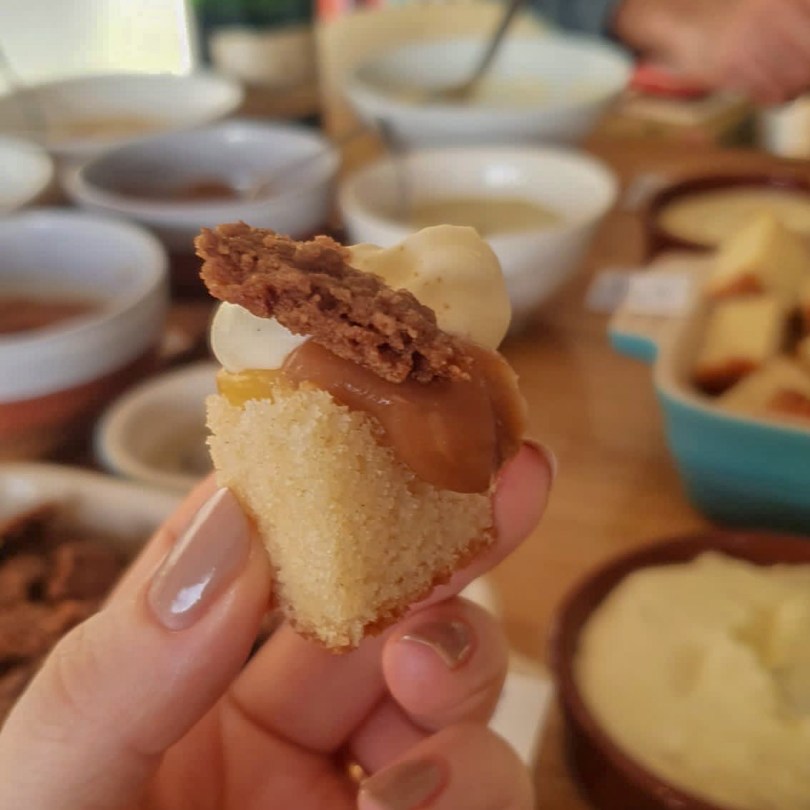
Vanilla cake, mascarpone frosting, passionfruit curd, passionfruit caramel, crumble

After trying a whooole lot of combinations, we decided on 2 flavours, one for each tier. And with special permission from the bride herself, I can tell you the flavours:

  1. Chocolate cake, dark chocolate ganache, miso caramel and crumble
  2. Vanilla cake, passionfruit syrup, mascarpone frosting, passionfruit curd & passionfruit caramel

It surprisingly didn’t take too long to land on these combos – we tasted them and immediately knew that was it. They’re delicious and a bit different to a classic wedding cake. It did mean I ended up with mountains of leftovers, which wasn’t surprising considering just how much of everything I made for only the 3 of us. But, everyone in my office was very grateful when I brought them in – I made a lot of friends that day. Decoration is still TBC, but I’ll make sure to do a post on the final cake. In the meantime, please wish me luck and if you have any tips let me know in the comments please!

Italian Sausage Detroit Pizza

Italian Sausage & Red Onion Detroit Pizza

I’m not sure what inspired this but over Christmas I was just absolutely craving a Detroit pizza, having never had one before… For those of you who haven’t had the joy of trying a Detroit pizza, it’s a much breadier version of its Italian counterpart. Think along the lines of a focaccia with pizza toppings. The crust is thick & chewy with big air bubbles – it’s also rectangular. Basically all round delicious – a dream for bread lovers.

For this, I don’t have my own dough recipe as I’m not a bread-master but there’s lots of great options if you search for it. The toppings are a creation of my own though: my marinara, Italian seasoned sausage, red onions & a grating of pecorino once cooked. I’m getting hungry thinking about it…


Italian Sausage & Red Onion Detroit Pizza

Serves 4-6 (4 very hungry people) | 1 hour prep + proving time (depends on dough recipe used)

Ingredients

~700g dough of your choice (see notes)

1x my marinara sauce, cooked for pizza as per the instructions

1x my italian seasoned sausage

500g low moisture mozzarella grated (see notes)

1 red onion, thinly sliced

Grated pecorino to serve

Olive oil for greasing

Pan or pans totalling 1,500-,1600cm² – these need to be a baking tray about 2-3cm deep. I used 2 trays ~20cmx40cm each

Method

  1. Brush you pan(s) with olive oil. Split your dough in half and transfer to the pans. Rub more olive oil on top of the dough. Now leave to rest again covered loosely with cling film for ~1hour in a warm place.
  2. In the mean time, fry the sausage meat in a large pan with olive oil over a medium heat. Break into chunks, and cook until almost cooked through. You don’t want much too colour on the sausage as it will continue to cook in the oven. Set aside
  3. Preheat the oven to 230°C/210°C fan
  4. Push the dough to fill the pan & dimple with your fingertips.
  5. Sprinkle over the mozzarella then spoon over the, marinara in even strips. Next scatter over the sausage and sliced red onion.
  6. Bake until deeply golden (30-40 mins).
  7. Remove from the oven & leave to cool for 5 mins. Remove from the pan, sprinkle over the pecorino and serve!

Notes:

Dough – If you Google Detroit Pizza recipes there are lots of great options for doughs

Mozzarella – In the UK we can’t get blocks of low moisture mozz so we have to use the grated stuff. In this case you’ll need to wash the mozzarella to get rid of the starch (this is used to stop the cheese sticking to itself, but it’ll also stop you getting a nice melt). Put the cheese into a sieve and rinse under cold water until the water runs clear. Spread the cheese in a thin layer onto paper towels and leave to dry.
Italian Sausage Meat

Basics By Meg: Italian Sausage Meat

Number 2 in my basics collection is an absolute staple for pizza, pasta, sandwiches etc. etc. – Italian seasoned sausage. This is similar to my Italian sausage roll mix but slightly less strong (i.e. no anchovies & no parmesan) in order to make sure it complements the dishes it’s added to. I love this fried up in chunks & scattered over a pizza, squashed into a patty & fried for in a breakfast muffin, or anything really. I have a few recipes using this sausage coming up so keep your eyes peeled for ideas of how to use it. This can be subbed into any recipe calling for sausage meat if you want to add an Italian twist.


Italian Sausage Meat

Makes 400g | 10 mins prep

Ingredients

400g sausage meat

2 large garlic cloves, minced

Large handful parsely finely chopped

2tsp fennel seeds toasted (or fennel pollen if you can get your hands on it)

1 tsp dried thyme

1 tsp dried oregano

A few shakes of chilli flakes

Salt & black pepper to taste

Method

  1. In a dry pan over medium heat, toast the fennel seeds tossing often until fragrant. Leave these to cool & grind in a pestle & mortar (or coffee grinder, or chop with a knife – be prepared for them to pop out as you chop)
  2. Combine all ingredients in a bowl & mix thoroughly.
  3. Taste & adjust seasoning by frying up a small batch.

Note: I definitely recommend fennel pollen if you can source it as it adds the fennel flavour plus some extra delicious aromatics.

Meg's Perfect Spaghetti Carbonara

Meg’s Perfect Carbonara

I would like to say as a disclaimer I am not Italian, and I apologise if this recipe does not represent a traditional carbonara. I am merely a super-fan of the Italian cuisine who happens to have made a delicious carbonara recipe. As a word of warning, this is probably the richest carbonara you will have, owing to the use of an egg and an egg yolk per person, so be prepared to be very full if you make this. This is not your everyday carbonara – you have been warned.

You may find it odd I only use parmesan and no pecorino, but I actually prefer an all parmesan carbonara (again, sorry) – so feel free to half & half pecorino & parmesan if you so wish. The thing I will definitely stick to tradition for is the guanciale. If you can get your hands on it I reaaaally recommend using guanciale. It adds a much deeper flavour than pancetta and really elevates this dish. I get mine from Eataly usually, but I’ve also ordered it from Lina Stores who ship nationwide! This is the product of endless carbonara trial & errors, until I found the perfect egg/egg yolk/cheese etc. balance. I am finally here sharing with you my perfect, foolproof carbonara: the dinner to wow anyone made in under 30 mins.


Meg’s Perfect Carbonara

Serves 2 (hungry people) | 20 mins prep & cooking

Ingredients

200g pasta of your choice (my personal faves include paccheri, rigatoni & linguine)

150g Guanciale chopped into chunks (or pancetta if you can’t get your hands on guanciale, but the guanciale really adds the ‘wow’)

2 whole eggs

2 egg yolks

75g grated parmesan (or half pecorino, half parmesan)

Freshly ground black pepper (you won’t need much if you’re using guanciale)

Method

  1. Cook your pasta in a pot of water salted like the sea for 2-3 mins less than instructed on the packet.
  2. In the meantime, add your guanciale to a cold frying pan and bring up to medium/high heat. This renders out he fat giving you extra crisp and completely not flabby fat (ew). Drain any excess oil and set aside off the heat until the pasta is ready.
  3. Beat your eggs, egg yolks, parmesan and freshly ground pepper until combined. Add 3-6 spoon fulls of pasta water (this depends how loose your like your sauce, 3 spoons will be a drier sauce) to your egg mix one by one, beating the whole time to temper your eggs and help prevent scrambled egg pasta
  4. When the pasta is done, transfer it to your guanciale pan and return to medium heat being sure to reserve the pasta water.
  5. Add a ladle of pasta water to the pan and cook until almost disappeared. Check if your pasta is cooked to your liking, if still a little too firm repeat this stage.
  6. Once the pasta is cooked, take the pan off the heat and add your egg mix to the pan while constantly moving the pasta. Keep tossing the pasta while moving between off the heat & on low heat (this helps you keep more control of the cooking, and stop the eggs scrambling)
  7. Continue this process until the sauce has thickened and clings to the pasta. Exactly when the sauce is done depends on how you like your carbonara, but you need to cook long enough for the eggs to be cooked thoroughly. You can add some extra pasta water here if you want your sauce a little looser.
  8. Serve with extra parm and some freshly cracked black pepper
Marinara

Basics By Meg: Marinara

I’m starting a basics recipe collection! In this collection I’ll be writing recipes for components that can be built up/used in full dishes. The first in this collection is my marinara sauce. A very tasty, but very simple tomato sauce that can be used in pizzas, pasta, sandwiches etc. etc. – anywhere your heart desires! This tomato sauce is rich in tomato-y flavour making it the perfect sauce to complement other flavours without overpowering them. It has a sweet, tanginess from the tomatoes, followed by a nice round, richness from the butter – the perfect balance (not to toot my own horn…).


Marinara

Makes 700g | 10 mins prep + 30-50 mins cooking

Ingredients

1tbsp oil

1tbsp butter

1 white onion, diced

3 cloves garlic, minced

3 tbsp tomato puree

800g tinned whole tomatoes + their juice

1-2 tsp dried oregano

Method

  1. Heat the oil & butter in a large saucepan over a medium heat. Add the onions & a pinch of salt. Cook until translucent and starting to caramelise (~10mins)
  2. Add the garlic and cook for a minute or 2 until fragrant.
  3. Add the tomato paste and cook until the colour has deepened slightly – around 3-5 mins – stirring often.
  4. Next add the tinned tomatoes and about half a tin full of water. Crush the tomatoes with the back of your spoon.
  5. Simmer this with the lid on for around 30-40 mins until the flavours have intesified.
  6. If using the sauce for pizza or a sandwich (i.e. you want it a little thicker) simmer with the lid off for 5-10 mins to reach the desired consistency.
  7. Add the dried oregano & season with salt and pepper to taste.